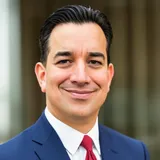
Guillermo Rojas
Co-Founder & Chief Executive Officer
He came to Clean Smarts from the commercial cleaning industry. When a client called to say nobody showed up to clean their clinic, Guillermo didn't just fix the problem. He built the software.
Guillermo Rojas is the co-founder and CEO of Clean Smarts. He didn’t set out to build cleaning company software. He set out to fix a clinic that hadn’t been cleaned, and the tools he needed to prevent that from ever happening again simply didn’t exist.
The call that started everything
It was 2016. Guillermo had just left corporate America — a career in mergers and acquisitions at General Electric, then running operations for a healthcare facility — for commercial cleaning. He came in expecting to apply the same discipline he’d used in hospital administration: systems, accountability, real-time visibility into what was happening on the ground.
What he didn’t find was software that could help him do any of that.
The moment it crystallized was a clinic that hadn’t been cleaned. Crews were unreliable. One night, a client called to say nobody had shown up. He searched for tools. What he found was limited, fragmented, and not built for the kind of accountability he knew from running a healthcare facility. He was pulling his hair out — and that’s when it clicked: “There has to be something. We need to do something different.”
Finding a technical partner
That same year he met Brent Monson, a developer who’d spent years building financial systems that had to be correct at scale. They talked through what the right software for a cleaning business would actually look like — and landed on the name: Clean Smarts.
What he brought to the industry
Guillermo came to commercial cleaning from two worlds that ran on serious software: enterprise finance at GE and healthcare operations. Both had mature ecosystems — scheduling tools, financial dashboards, accountability layers. Cleaning had almost none of it.
“It’s a very humble industry,” he says. “But it’s a wonderful one.” Every building gets cleaned. Millions of people do that work every day. And for decades, the technology to manage that work hadn’t kept pace with what operators actually needed.
He also understood something specific about the workforce. In Texas, where Clean Smarts got its start, roughly 80% of cleaning crews are Hispanic. Spanish wasn’t optional — it was essential. Clean Smarts launched with multilingual support built into the core of the platform so diverse field teams can actually use it.
What accountability actually looks like
Guillermo’s working definition of what Clean Smarts does is this: it helps cleaning providers run efficient operations, give great customer service, and stay financially sharp. In practice, that means building trust — between cleaning companies and their clients, and between business owners and their crews.
His years in the field taught him what long-term client relationships actually require: customers who know you personally, and who trust that if something goes wrong at 2am, it gets handled. The software is the operational layer that makes that kind of trust scalable — across dozens or hundreds of locations, not just one clinic.
That accountability runs in both directions. Good documentation doesn’t just hold workers accountable to their employers. It protects workers when a client points fingers after the fact. Clean Smarts gives everyone in the chain — owner, supervisor, cleaner, client — the visibility to know what happened and when.
Under Guillermo’s leadership, Clean Smarts has grown into janitorial management software rated 4.8★ on the Apple App Store (1.6K ratings as of August 2026) — with a roadmap grounded in what real operators actually ask for. When he showed a customer who’d been managing 350 credit union branches across Texas by paper what Clean Smarts could do — real-time inspections, QR-code issue reporting, GPS-verified clock-ins — the customer said it completely changed how his operation worked. That’s the kind of moment Guillermo is still building toward.
“Being transparent and kind always pays. Every time I guide a customer to a different product that fits them better, they come back when they’re ready for what we actually do.”